
Recommended Services
Supported Scripts
AI Automation · Chicago
AI automation for enquiry routing.
Use the authorised data.
Automation can classify an incoming request and prepare a suggested next step. Define which decisions need a person before information is sent or a record is changed. Limit the information sent to a model or connected tool to the authorised task.

Automations need boundaries,
not just connections.
We design around the systems you already use and keep the scope of each automation explicit.




Start with a manageable workflow.

AI Chatbot Development
We define what the assistant may answer, what it must not infer and how enquiries reach your team.
Machine Learning
We look at data quality and the decision you need to make before recommending an analytical approach.


ChatGPT Integrations
We scope the assistant’s inputs, allowed actions and review steps rather than treating generated text as automatically correct.
AI Workflow Automation
We document the repeated steps and identify where a dependable system connection can replace manual copying.

A practical comparison
with the manual process.
The evaluation compares the actual task before and after implementation, including failures and review time.
Execution time
Compare the time needed to complete the task, including approvals and corrections.
Manual steps
Check which manual steps have actually been removed from the workflow.
Errors
Review the cases that need correction, not only the successful runs.
Workflow completion
Measure completed outcomes and the review effort needed to achieve them.
A PRACTICAL STARTING POINT
Use automation to prepare catalogue work for review.
Product descriptions and categorisation can benefit from structured assistance when source data and review ownership are clear. Keep published claims grounded in verified product information.
01 · Prepare
Prepare representative products, categories, images and the information customers need before making a decision.
02 · Verify
Review a product on mobile and desktop, including variations, specifications and the next step to enquire or purchase.
03 · Keep ownership clear
Keep an owner for product information, stock-related connections and future catalogue changes.
Illustrative sequence. The actual configuration and responsibilities follow the agreed requirements.
DELIVERY & OWNERSHIP
Decide what information is actually required.
List the information used for the agreed task and who needs access to it. Avoid collecting extra records simply because a form or system makes it possible.
01 · Prepare
Limit the information sent to a model or connected tool to the authorised task.
02 · Verify
Review the information sent to the model or tool and confirm that it belongs in the authorised task.
03 · Keep ownership clear
Assign control of retained workflow records, access changes and any required specialist data review.
OUR WORK
Connected workflows in practice.
Examples of organised data and system integration.

PlegmaHost
A corporate website connected to WHMCS
We developed a WordPress website linked to WHMCS, organising package information, registration and service management into one customer journey.
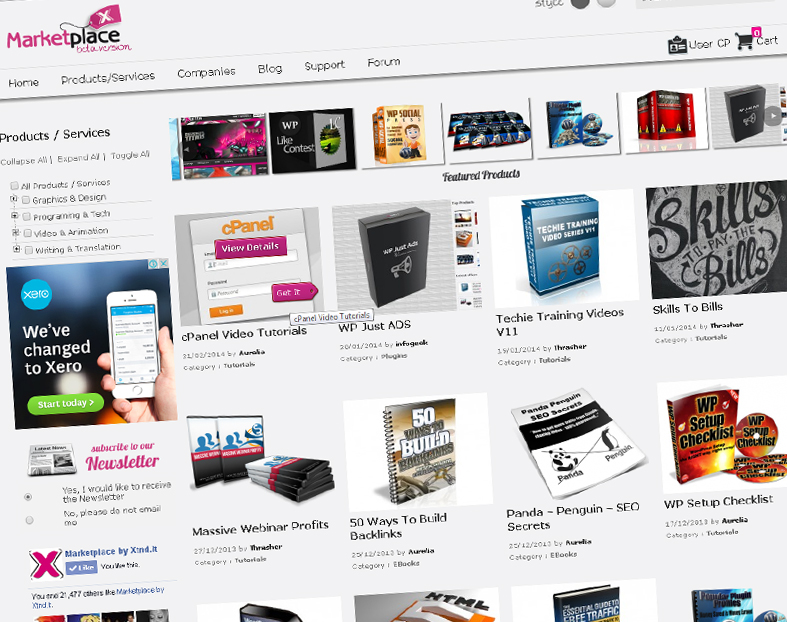
XTND Marketplace
A multi-vendor digital marketplace
We built a WordPress marketplace for creators’ digital products, including listings, categories, reviews and purchasing through a shared platform.
CONNECTED SYSTEMS AND TECHNICAL SUPPORT — CLIENT FEEDBACK
“They always deliver and are very creative with web design/development. They are absolute masters of WordPress. They have also been great with dealing with a large number of stakeholders within business.”
Joel K. · Jim’s Group
SERVICE AREA
For your audience in Chicago.
Products and catalogues.
Serving Chicago can involve customers with different usage patterns. Describe when and how the audience uses the service rather than assuming the city name predicts demand.
Check execution limits, queues and review capacity when input volume increases.
The map identifies the audience area. Project scope, collaboration and delivery are agreed around the business and its users; it does not imply a local office.
- Field mapping
- Access and duplicate checks
- Ambiguous inputs
Chicago
Which process should we examine first?
Share a recurring task and the tools it passes through. We will review whether automation is appropriate before proposing a solution.

PRACTICAL QUESTIONS
Before we agree the next step.
Questions about the work, the checks and the handover.
Use defined booking rules and the authoritative system for availability. AI may assist with language or classification, but exceptions and consequential changes need agreed controls.
That is not a safe default for every business. Start with classification or draft replies, define exceptions and require approval for actions with meaningful customer or business consequences.
Use execution records and explicit completion or failure states. A generated answer alone does not prove that an external action succeeded. Verify the relevant system response.
YOUR NEXT STEP
Connect account requests without granting uncontrolled access.
Explain who will use and maintain the result. We can make the responsibilities part of the scope from the beginning.
Identify who approves outputs and who can change prompts, tools or permissions.