
Recommended Services
Supported Scripts
App Development · Liverpool
Applications for catalogue tools.
Connect the right tools.
Search, saved choices and quote or order requests can turn product information into a working application. Choose features from actual user tasks. Confirm which existing tools expose the data and actions the application requires.
- Web applications and portals
- Tools for your team and customers
- Connections to your existing systems

PURPOSE BEFORE TECHNOLOGY
A useful first version.
A clearer next decision.
The brief starts with a concrete problem rather than an assumed collection of features.
Customer portals
A controlled place for users to exchange requests, files and information.
Internal tools
Bring recurring approvals, assignments and updates out of disconnected emails.
Digital products
Define the smallest useful version, with deliberate decisions about what comes later.
A FIRST RELEASE WITH A CLEAR PURPOSE
A defined first release.
Not an endless wish list.
We separate essential functionality from later improvements and record the boundaries of the first release.
- Core user journey and user roles
- Features and data for the first release
- Dependencies on third-party services
- Testing and acceptance criteria
THE PROJECT PLAN
Turn requirements
into a working release.
- Goal—what needs to change for the user
- Workflow—how the core task is completed
- Data—what is stored and who can access it
- Release—what is delivered and how it is tested
DEVELOPMENT IN CLEAR STAGES
Review the work
before moving forward.
01
Discovery
The specification records who the application serves and what a successful task looks like.
02
Prototype
A prototype helps expose missing steps and confusing decisions early.
03
Development
Development proceeds through agreed stages, with demonstrations and functional checks.
04
Testing & release
We check the release, organise deployment and clarify ongoing support responsibilities.
Connected applications.
Less duplicated information.
- CRM and customer service tools
- E-commerce and payment services
- Files, databases and reports
- APIs and automated updates
INTEGRATIONS THAT MAKE SENSE
Build connections,
not another data silo.
We examine how the application exchanges information with CRM, payments, email and existing databases.
API access and external platform limitations are checked before the integration scope is agreed.
BEYOND THE FIRST RELEASE
Think beyond launch day.
Roles & access
Access rules are designed into the product rather than added after the interface is finished.
Testing real workflows
Testing includes what happens when a request fails or the user does not follow the expected path.
Handover & maintenance
We clarify documentation, fixes and future development before handover.
FREQUENTLY ASKED QUESTIONS
Questions before the first release.
List the tasks and records each audience needs, then grant only the relevant access. Include staff administration and account recovery in the model rather than treating them as later additions.
We first review the code, documentation, dependencies and available access. We can then determine whether it makes sense to continue development, upgrade in stages or build a new solution.
They may need different views of the same records. Define each role’s tasks and access so the application presents the right controls without exposing unnecessary information.
We start with how the application will be used and choose the right approach: a web application, a responsive interface or a dedicated mobile app. The technology and any required app store distribution are set out in the proposal.
It may coordinate them rather than replace them. Review their APIs, data ownership and limitations, and choose the smallest integration that supports the intended workflow.
A PRACTICAL STARTING POINT
Make bookings a coherent application workflow.
An application can coordinate availability, customer details and staff actions. Model the booking states and exceptions alongside the interface.
01 · Prepare
Identify availability rules, required customer details and who can change a confirmed booking.
02 · Verify
Try an available slot, an unavailable slot and a cancellation. Check the customer message and the team’s own record.
03 · Keep ownership clear
Record the booking rules and the person responsible for capacity, cancellations and customer follow-up.
Illustrative sequence. The actual configuration and responsibilities follow the agreed requirements.
DELIVERY & OWNERSHIP
Confirm the dependency before building around it.
Identify the provider, available access and the functions the external service actually supports. Include licence or usage restrictions that could affect the proposed work.
01 · Prepare
Confirm which existing tools expose the data and actions the application requires.
02 · Verify
Test the application’s use of the existing business tool, including unavailable data or a rejected operation.
03 · Keep ownership clear
Record authoritative data, integration ownership and the process for reconciling interrupted exchanges.
OUR WORK
Applications built around real tasks.
Selected work in bookings, portals and digital products.
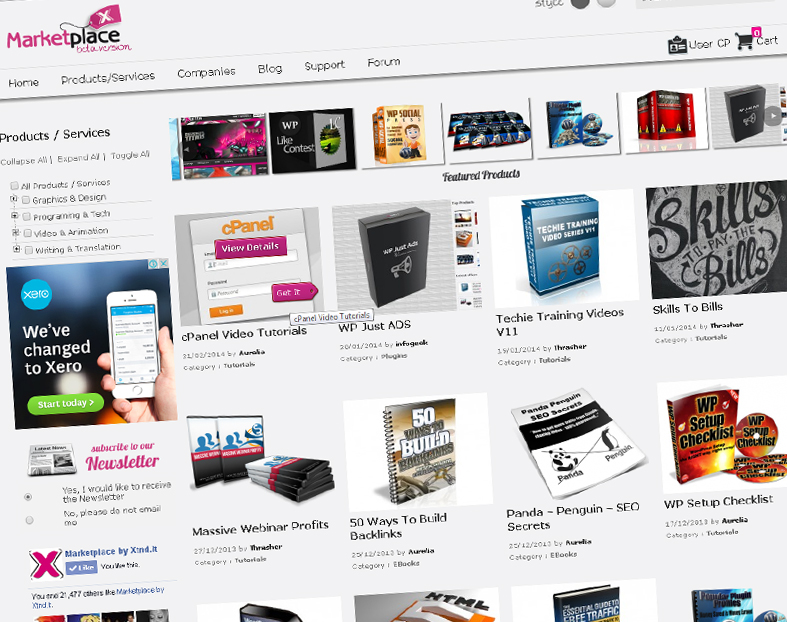
XTND Marketplace
A multi-vendor digital marketplace
We built a WordPress marketplace for creators’ digital products, including listings, categories, reviews and purchasing through a shared platform.

BDS Travel
Tours and online reservations
We developed a website with online bookings for tours in Greece, connecting photographs and practical information with ticket purchasing.
IN OUR CLIENTS’ WORDS
“Their Node.js hosting is super fast, and they helped me migrate everything smoothly. Highly recommended for developers.”
Ethan B.
SERVICE AREA
For your audience in Liverpool.
Connected business tools.
Applications for your team’s work in Liverpool. Discuss the records needed for daily operation, how information moves and who is allowed to use it.
Define record-level access, export permissions and account recovery behaviour.
The map shows the area your project serves.
- Available code and documentation
- Observed failures
- Repair versus replacement
Liverpool
THE NEXT STEP
Tell us what you need
your application to do.
Start with the work that needs to happen, then we can discuss the right application.
YOUR NEXT STEP
Build an application that handles language deliberately.
Share the existing providers and the connection you need. We can check the dependency before promising an implementation.
Confirm which existing tools expose the data and actions the application requires.