
Recommended Services
Supported Scripts
App Development · Ioannina
Applications for multiple languages.
Review account recovery.
Language can affect interface text, entered data, dates and notifications. Define which parts change and which records remain shared across versions. Define record-level access, export permissions and account recovery behaviour.
- Web applications and portals
- Tools for your team and customers
- Connections to your existing systems

PURPOSE BEFORE TECHNOLOGY
Start with the job
the application must do.
The brief starts with a concrete problem rather than an assumed collection of features.
Customer portals
A controlled place for users to exchange requests, files and information.
Internal tools
Bring recurring approvals, assignments and updates out of disconnected emails.
Digital products
Define the smallest useful version, with deliberate decisions about what comes later.
A FIRST RELEASE WITH A CLEAR PURPOSE
A defined first release.
Not an endless wish list.
We separate essential functionality from later improvements and record the boundaries of the first release.
- Core user journey and user roles
- Features and data for the first release
- Dependencies on third-party services
- Testing and acceptance criteria
THE PROJECT PLAN
Turn requirements
into a working release.
- Goal—what needs to change for the user
- Workflow—how the core task is completed
- Data—what is stored and who can access it
- Release—what is delivered and how it is tested
DEVELOPMENT IN CLEAR STAGES
Review the work
before moving forward.
01
Discovery
The specification records who the application serves and what a successful task looks like.
02
Prototype
We test the core screens and user journey before investing in the complete build.
03
Development
We deliver reviewable increments so feedback can influence the work while it is still in progress.
04
Testing & release
Release planning covers testing, access, rollout and what happens after the first users arrive.
Connected applications.
Less duplicated information.
- CRM and customer service tools
- E-commerce and payment services
- Files, databases and reports
- APIs and automated updates
INTEGRATIONS THAT MAKE SENSE
Build connections,
not another data silo.
We examine how the application exchanges information with CRM, payments, email and existing databases.
API access and external platform limitations are checked before the integration scope is agreed.
BEYOND THE FIRST RELEASE
A dependable release.
A maintainable next version.
Roles & access
Permissions specify which users may view or change each type of information.
Testing real workflows
Core journeys are checked alongside failures, validation and alternative scenarios.
Handover & maintenance
Your team should understand what has been delivered and how changes will be handled after release.
FREQUENTLY ASKED QUESTIONS
Questions before the first release.
Agree field mapping, cleanup rules and a verification sample before importing. Keep a way to reconcile the imported data and decide how changes during the transition are handled.
We start with how the application will be used and choose the right approach: a web application, a responsive interface or a dedicated mobile app. The technology and any required app store distribution are set out in the proposal.
We first review the code, documentation, dependencies and available access. We can then determine whether it makes sense to continue development, upgrade in stages or build a new solution.
No. We need a description of the problem, the users and how the work is done today. Discovery turns that information into functional requirements.
We agree in advance on fixes, technical maintenance and future releases. Hosting, third-party service licences and ongoing development are listed separately, so the full scope is clear.
A PRACTICAL STARTING POINT
Replace the spreadsheet workflow one useful step at a time.
A custom app should make responsibilities and record changes easier to follow. Start with the handover that causes the most friction, including its exceptions.
01 · Prepare
Identify what already works, where people get stuck and which URLs or records must survive the change.
02 · Verify
Compare the old and new journey using the same tasks. Check retained information and the transition path.
03 · Keep ownership clear
Keep a record of changed behaviour, the people affected and the process for subsequent corrections.
Illustrative sequence. The actual configuration and responsibilities follow the agreed requirements.
DELIVERY & OWNERSHIP
Decide what information is actually required.
List the information used for the agreed task and who needs access to it. Avoid collecting extra records simply because a form or system makes it possible.
01 · Prepare
Define record-level access, export permissions and account recovery behaviour.
02 · Verify
Review record access, exports and recovery flows with suitable test data for each role.
03 · Keep ownership clear
Assign account ownership and the handling requirements that continue after the application is released.
OUR WORK
Applications built around real tasks.
Selected work in bookings, portals and digital products.
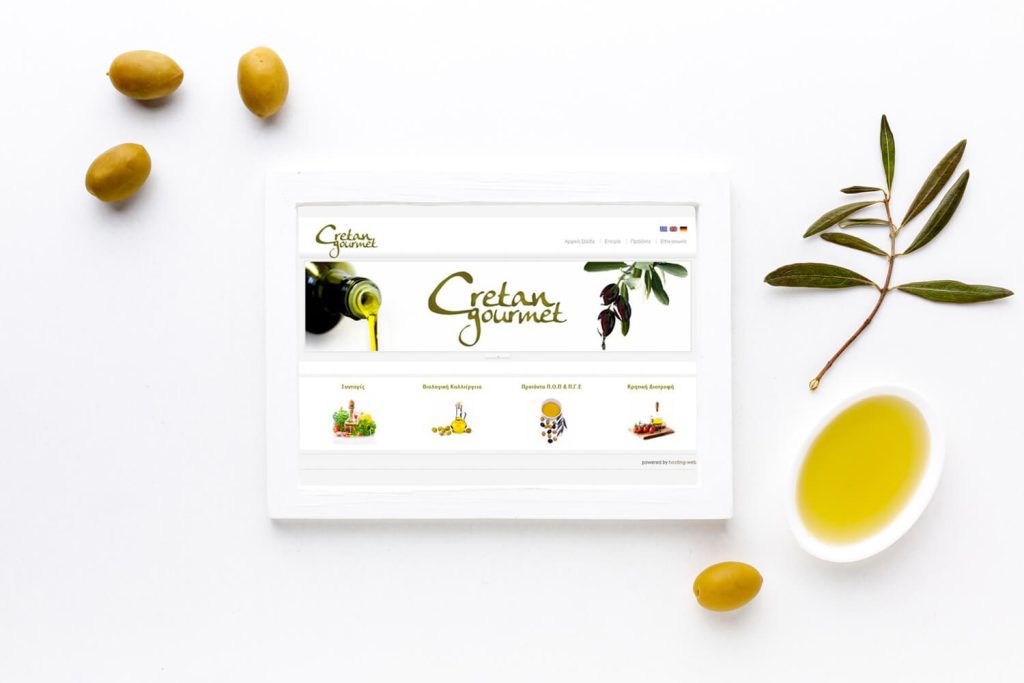
Cretan Gourmet
A bilingual online shop
We built a WooCommerce shop for Mediterranean products, with bilingual content, product categories and a mobile-friendly purchasing process for an international audience.

Barracuda
A large WooCommerce parts catalogue
We developed a WooCommerce store for an extensive parts and accessories catalogue, organising navigation and categories for desktop and mobile shopping.
IN OUR CLIENTS’ WORDS
“Very fast, very reliable. They setup hosting for complex applications, integrated tracking, and helped manage multilingual content. Respectful communication, good security knowledge. I trust them.”
Ivan S. · Σύμβουλος κυβερνοασφάλειας
SERVICE AREA
For your audience in Ioannina.
Member journeys.
A team serving Ioannina may collaborate from more than one place. Agree who supplies information and who approves changes without assuming everyone shares an office or schedule.
Model customer and staff permissions before choosing the application screens.
The map identifies the audience area. Project scope, collaboration and delivery are agreed around the business and its users; it does not imply a local office.
- Users doing the work
- Exceptions and approvals
- Ownership of notifications
Ioannina
THE NEXT STEP
Tell us what you need
your application to do.
Start with the work that needs to happen, then we can discuss the right application.
YOUR NEXT STEP
Build the application around the request it must handle.
Bring one clear objective and the existing setup. We can identify a practical first step and the checks needed to accept it.
Build one complete user task before extending the application’s feature list.