
Recommended Services
Supported Scripts
App Development · Kalamata
Applications for internal tools.
Complete the first useful task.
An internal app can reduce repeated lookups when roles, authoritative data and sync rules are clear. Verify access to the existing systems before defining the build. Build one complete user task before extending the application’s feature list.
- Web applications and portals
- Tools for your team and customers
- Connections to your existing systems

PURPOSE BEFORE TECHNOLOGY
Start with the job
the application must do.
The brief starts with a concrete problem rather than an assumed collection of features.
Customer portals
Give customers or staff access to the records and actions relevant to their role.
Internal tools
Organise a repeatable internal process with clear responsibilities and visible progress.
Digital products
Define the smallest useful version, with deliberate decisions about what comes later.
A FIRST RELEASE WITH A CLEAR PURPOSE
Build the starting point
you can evaluate.
We separate essential functionality from later improvements and record the boundaries of the first release.
- Core user journey and user roles
- Features and data for the first release
- Dependencies on third-party services
- Testing and acceptance criteria
THE PROJECT PLAN
A product process
with visible decisions.
- Goal—what needs to change for the user
- Workflow—how the core task is completed
- Data—what is stored and who can access it
- Release—what is delivered and how it is tested
DEVELOPMENT IN CLEAR STAGES
See what is ready.
Know what comes next.
01
Discovery
The specification records who the application serves and what a successful task looks like.
02
Prototype
A prototype helps expose missing steps and confusing decisions early.
03
Development
Development proceeds through agreed stages, with demonstrations and functional checks.
04
Testing & release
Release planning covers testing, access, rollout and what happens after the first users arrive.
Your existing systems
remain part of the plan.
- CRM and customer service tools
- E-commerce and payment services
- Files, databases and reports
- APIs and automated updates
INTEGRATIONS THAT MAKE SENSE
Build connections,
not another data silo.
We examine how the application exchanges information with CRM, payments, email and existing databases.
API access and external platform limitations are checked before the integration scope is agreed.
BEYOND THE FIRST RELEASE
A dependable release.
A maintainable next version.
Roles & access
Access rules are designed into the product rather than added after the interface is finished.
Testing real workflows
Core journeys are checked alongside failures, validation and alternative scenarios.
Handover & maintenance
We clarify documentation, fixes and future development before handover.
FREQUENTLY ASKED QUESTIONS
Define the project before the build.
Usually it can be one application with an appropriate language model. The architecture depends on shared data, translation ownership and any genuinely different market rules.
It may coordinate them rather than replace them. Review their APIs, data ownership and limitations, and choose the smallest integration that supports the intended workflow.
Agree field mapping, cleanup rules and a verification sample before importing. Keep a way to reconcile the imported data and decide how changes during the transition are handled.
We start with how the application will be used and choose the right approach: a web application, a responsive interface or a dedicated mobile app. The technology and any required app store distribution are set out in the proposal.
We first review the code, documentation, dependencies and available access. We can then determine whether it makes sense to continue development, upgrade in stages or build a new solution.
A PRACTICAL STARTING POINT
Give catalogue users a purposeful set of tools.
Search, saved choices and quote or order requests can turn product information into a working application. Choose features from actual user tasks.
01 · Prepare
Prepare representative products, categories, images and the information customers need before making a decision.
02 · Verify
Review a product on mobile and desktop, including variations, specifications and the next step to enquire or purchase.
03 · Keep ownership clear
Keep an owner for product information, stock-related connections and future catalogue changes.
Illustrative sequence. The actual configuration and responsibilities follow the agreed requirements.
DELIVERY & OWNERSHIP
Keep the first change small enough to verify.
Identify the one outcome that makes the initial work useful. Put later additions in a separate list so the first delivery has a clear boundary.
01 · Prepare
Build one complete user task before extending the application’s feature list.
02 · Verify
Ask a representative user to complete the first agreed task, including a rejected input and a recoverable error.
03 · Keep ownership clear
Define the accepted release, its administrator and the next feature decisions outside the initial scope.
OUR WORK
Applications built around real tasks.
Selected work in bookings, portals and digital products.

Smart Computer
An online shop for technology products
We developed an e-commerce website with an extensive computing-products catalogue, focusing on discovery, comparison and a clear purchasing process.
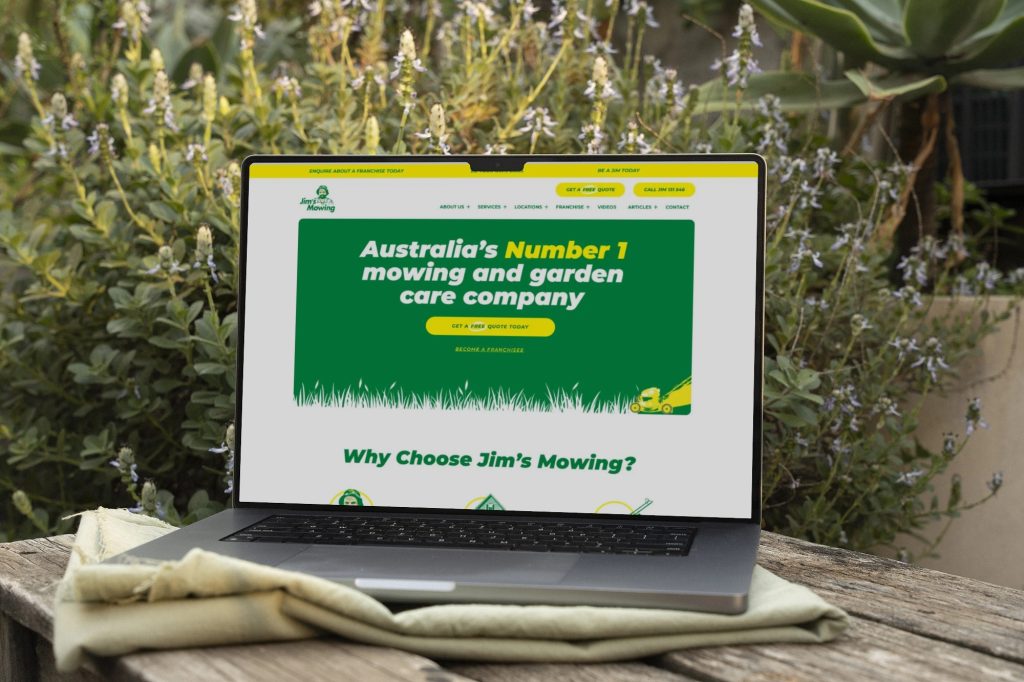
Jim’s Mowing
A business website with custom location tools
We developed the corporate website and a WordPress extension for presenting service areas, organising a large collection of local services within one manageable structure.
IN OUR CLIENTS’ WORDS
“They always deliver and are very creative with web design/development. They are absolute masters of WordPress. They have also been great with dealing with a large number of stakeholders within business.”
Joel K. · Jim’s Group
SERVICE AREA
For your audience in Kalamata.
Member journeys.
Applications for your team’s work in Kalamata. Make the team’s roles clear. Identify who supplies content and access, who approves work and who owns later changes.
Model customer and staff permissions before choosing the application screens.
The map shows the area your project serves.
- Available code and documentation
- Observed failures
- Repair versus replacement
Kalamata
THE NEXT STEP
Tell us what you need
your application to do.
Describe the users, the problem and the outcome the first version must deliver.
YOUR NEXT STEP
Give catalogue users a purposeful set of tools.
Tell us what is changing, when it matters and what evidence you already have. We can assess the preparation that is actually justified.
Check concurrent actions, important limits and the expected user journey.