
Recommended Services
Supported Scripts
App Development · Chicago
Applications for incoming requests.
Define the user roles.
A useful app gives each request a clear status, owner and next action. Define the smallest complete journey before adding more screens. Model customer and staff permissions before choosing the application screens.
- Web applications and portals
- Tools for your team and customers
- Connections to your existing systems

PURPOSE BEFORE TECHNOLOGY
A useful first version.
A clearer next decision.
The brief starts with a concrete problem rather than an assumed collection of features.
Customer portals
A controlled place for users to exchange requests, files and information.
Internal tools
Bring recurring approvals, assignments and updates out of disconnected emails.
Digital products
Define the smallest useful version, with deliberate decisions about what comes later.
A FIRST RELEASE WITH A CLEAR PURPOSE
A defined first release.
Not an endless wish list.
The scope prioritises a complete core journey over a larger collection of unfinished features.
- Core user journey and user roles
- Features and data for the first release
- Dependencies on third-party services
- Testing and acceptance criteria
THE PROJECT PLAN
Turn requirements
into a working release.
- Goal—what needs to change for the user
- Workflow—how the core task is completed
- Data—what is stored and who can access it
- Release—what is delivered and how it is tested
DEVELOPMENT IN CLEAR STAGES
Review the work
before moving forward.
01
Discovery
We document user roles, required actions, data sources and practical constraints.
02
Prototype
We test the core screens and user journey before investing in the complete build.
03
Development
We deliver reviewable increments so feedback can influence the work while it is still in progress.
04
Testing & release
Release planning covers testing, access, rollout and what happens after the first users arrive.
Connected applications.
Less duplicated information.
- CRM and customer service tools
- E-commerce and payment services
- Files, databases and reports
- APIs and automated updates
INTEGRATIONS THAT MAKE SENSE
Put the right record
in the right place.
We examine how the application exchanges information with CRM, payments, email and existing databases.
We identify third-party dependencies early so unavailable functions do not become a late surprise.
BEYOND THE FIRST RELEASE
A dependable release.
A maintainable next version.
Roles & access
Permissions specify which users may view or change each type of information.
Testing real workflows
Core journeys are checked alongside failures, validation and alternative scenarios.
Handover & maintenance
Your team should understand what has been delivered and how changes will be handled after release.
FREQUENTLY ASKED QUESTIONS
Questions before the first release.
Agree field mapping, cleanup rules and a verification sample before importing. Keep a way to reconcile the imported data and decide how changes during the transition are handled.
They may need different views of the same records. Define each role’s tasks and access so the application presents the right controls without exposing unnecessary information.
Use filters that help users distinguish the products they need. Start from the catalogue data and representative search tasks, then test whether the controls improve the result.
We first review the code, documentation, dependencies and available access. We can then determine whether it makes sense to continue development, upgrade in stages or build a new solution.
Usually it can be one application with an appropriate language model. The architecture depends on shared data, translation ownership and any genuinely different market rules.
A PRACTICAL STARTING POINT
Give catalogue users a purposeful set of tools.
Search, saved choices and quote or order requests can turn product information into a working application. Choose features from actual user tasks.
01 · Prepare
Prepare representative products, categories, images and the information customers need before making a decision.
02 · Verify
Review a product on mobile and desktop, including variations, specifications and the next step to enquire or purchase.
03 · Keep ownership clear
Keep an owner for product information, stock-related connections and future catalogue changes.
Illustrative sequence. The actual configuration and responsibilities follow the agreed requirements.
DELIVERY & OWNERSHIP
Keep the first change small enough to verify.
Identify the one outcome that makes the initial work useful. Put later additions in a separate list so the first delivery has a clear boundary.
01 · Prepare
Build one complete user task before extending the application’s feature list.
02 · Verify
Ask a representative user to complete the first agreed task, including a rejected input and a recoverable error.
03 · Keep ownership clear
Define the accepted release, its administrator and the next feature decisions outside the initial scope.
OUR WORK
Applications built around real tasks.
Selected work in bookings, portals and digital products.

SilverDreams
Accommodation information and booking
We designed a responsive accommodation website with photography, local information and access to reservations, connecting the research stage with the decision to book.
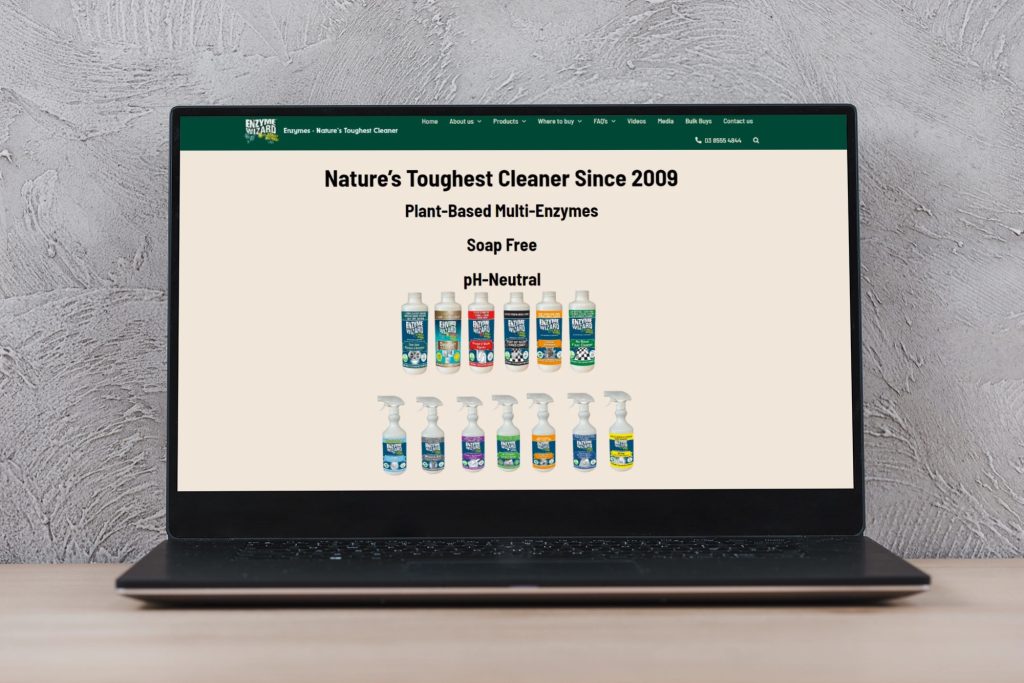
Enzyme Wizard
Products, information and online shopping
The website connects cleaning-product information, educational material and online purchasing, helping visitors move from understanding a product to finding it in the catalogue.
IN OUR CLIENTS’ WORDS
“They always deliver and are very creative with web design/development. They are absolute masters of WordPress. They have also been great with dealing with a large number of stakeholders within business.”
Joel K. · Jim’s Group
SERVICE AREA
For your audience in Chicago.
Connected business tools.
Applications for your team’s work in Chicago. Discuss the records needed for daily operation, how information moves and who is allowed to use it.
Define record-level access, export permissions and account recovery behaviour.
The map shows the area your project serves.
- Core user journey
- Acceptance criteria
- A separate backlog
Chicago
THE NEXT STEP
Tell us what you need
your application to do.
Start with the work that needs to happen, then we can discuss the right application.
YOUR NEXT STEP
Put permissions at the centre of the customer portal.
Explain who will use and maintain the result. We can make the responsibilities part of the scope from the beginning.
Model customer and staff permissions before choosing the application screens.