
Recommended Services
Supported Scripts
Web Development · Toronto
Development for customer portals.
Check server-side permissions.
Replace disconnected tasks with a web system your team can follow. We map the process, agree the scope and deliver in reviewable stages.


Designed for your project
A portal should expose the information and actions each customer or staff role needs. Define permissions at the data level as well as in the interface. Identify application roles and the people authorised to approve deployments.

Fast and scalable
The initial design includes room for agreed future requirements without pretending every possible feature belongs in version one.

Security from the start
User access, authentication and permissions are defined alongside the functionality.

A maintainable build starts
with a clear technical brief.
We consider existing infrastructure and long-term support alongside the immediate development requirements.
- Mobile-first web applications and responsive interfaces
- Custom dashboards, portals and internal tools
- API integrations with existing systems
- AI-assisted features where they add real value
- Cloud-connected and database-driven solutions
Development in stages
you can review.
You can review progress at agreed points and assess what has been completed before the next stage begins.
- Discovery—we document needs, users, workflows and constraints.
- UX/UI design—we design clear screens and practical user journeys.
- Development—we build in controlled stages and keep you updated.
- Testing—we check features, forms, performance and essential security measures.
- Deployment—we plan the release and carry out final checks.
- Support and upgrades—we agree on maintenance and future improvements.


Custom development,
with clear boundaries.
We look at the users, data and systems surrounding the task. That provides a practical specification for what needs to be built and what can remain unchanged.

Mobile Apps

Web Applications

eCommerce

Dashboards & SaaS

Integrations with a purpose.
We examine the available APIs and the way your team uses the data before proposing an integration.
- CRMs, ERPs and payment gateways
- E-commerce, social and community tools
- IoT, forms and external data sources where needed
- Chatbots and AI assistants with clear boundaries
- Custom backend systems and APIs
Connections depend on access permissions, available API functions and the terms of the external platform. We check these constraints at the start.
A PRACTICAL STARTING POINT
Connect the catalogue to the way orders are handled.
Product data, pricing rules and order handovers must agree across the website and connected systems. Define ownership and update rules before building the integration.
01 · Prepare
Prepare representative products, categories, images and the information customers need before making a decision.
02 · Verify
Review a product on mobile and desktop, including variations, specifications and the next step to enquire or purchase.
03 · Keep ownership clear
Keep an owner for product information, stock-related connections and future catalogue changes.
Illustrative sequence. The actual configuration and responsibilities follow the agreed requirements.
DELIVERY & OWNERSHIP
Make the handovers understandable to the whole team.
List the people who provide information, approve changes and use the result. Separate everyday access from the ability to change important settings or publish material.
01 · Prepare
Identify application roles and the people authorised to approve deployments.
02 · Verify
Test server-side permissions for each intended role, including actions reached without the normal interface.
03 · Keep ownership clear
Keep access ownership, deployment approval and the person responsible for application changes explicit.
OUR WORK
Development that connects the working parts.
Examples of websites, tools and connected systems.

Jim’s Mowing
A business website with custom location tools
We developed the corporate website and a WordPress extension for presenting service areas, organising a large collection of local services within one manageable structure.
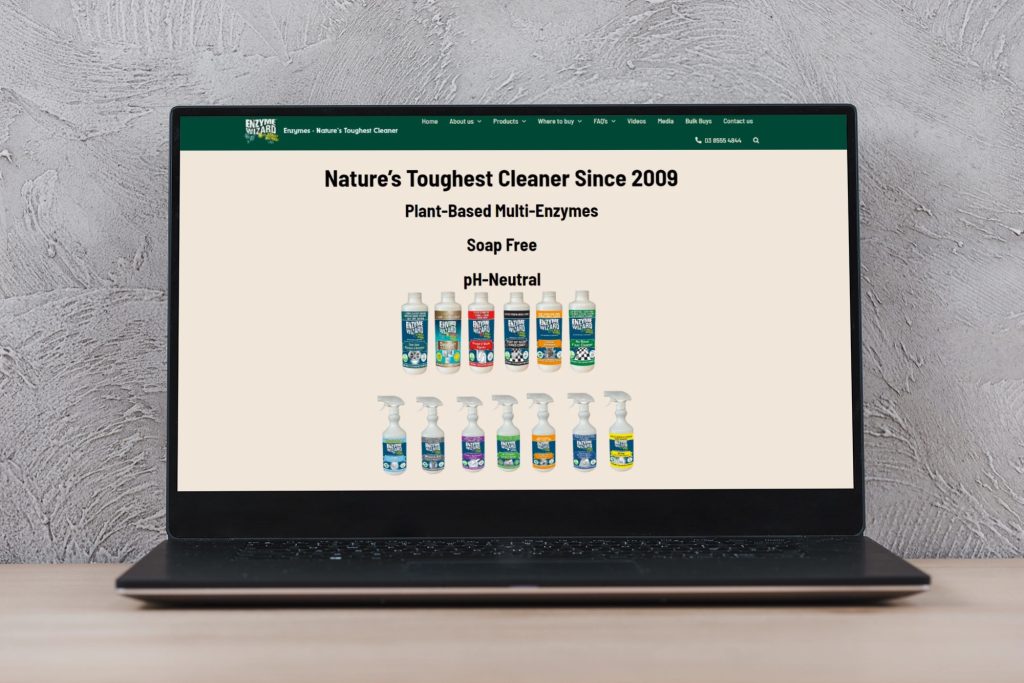
Enzyme Wizard
Products, information and online shopping
The website connects cleaning-product information, educational material and online purchasing, helping visitors move from understanding a product to finding it in the catalogue.
IN OUR CLIENTS’ WORDS
“Their team is incredibly skilled and goes above and beyond to ensure everything runs smoothly. Our clients have noticed the difference, and so have we!”
Leslie A. · European Aluminum Systems
SERVICE AREA
For your audience in Toronto.
Replacing an existing journey.
Web functionality for your team in Toronto. Plan for operation after delivery. Agree who handles routine changes and which additions need a separate piece of work.
Keep deployment, dependency updates and integration ownership documented.
The map shows the area your project serves.
- User roles
- Record ownership
- Validation and exception handling
Toronto
What should your next tool do?
Share the existing systems and the outcome you need. We will help define a build that can be reviewed and maintained.

A modern stack for web applications and workflows.

HTML5

CSS3

JavaScript

Angular

ReactJS

Node.js

CloudLinux
PRACTICAL QUESTIONS
Before we agree the next step.
Questions about the work, the checks and the handover.
Where it affects replies or processing, it can be useful to record it explicitly. Define how the receiving system uses that value and what happens if it is missing.
Agree whether the enquiry also needs durable storage, how delivery failures are detected and who follows up. A successful screen message should correspond to the behaviour the system actually guarantees.
That requires appropriate checks in the booking system, rather than the page design alone. Define the reservation and confirmation rules and test concurrent requests within the agreed technical scope.
YOUR NEXT STEP
Integrate the exception path as well as the happy path.
Describe the information the service will handle and any known requirements. We can identify the technical decisions and the additional review needed.
Enforce permissions on the server and handle credentials outside public code.