
Recommended Services
Supported Scripts
Web Development · London
Development for multilingual forms.
Keep releases maintainable.
Replace disconnected tasks with a web system your team can follow. We map the process, agree the scope and deliver in reviewable stages.


Designed for your project
Forms, stored records, notifications and external systems may all need language handling. Describe those requirements beyond translating visible page text. Keep deployment, dependency updates and integration ownership documented.

Fast and scalable
We account for foreseeable changes in users, data and features when defining the architecture.

Security from the start
We document who can view, create and change information before connecting the interface to live data.
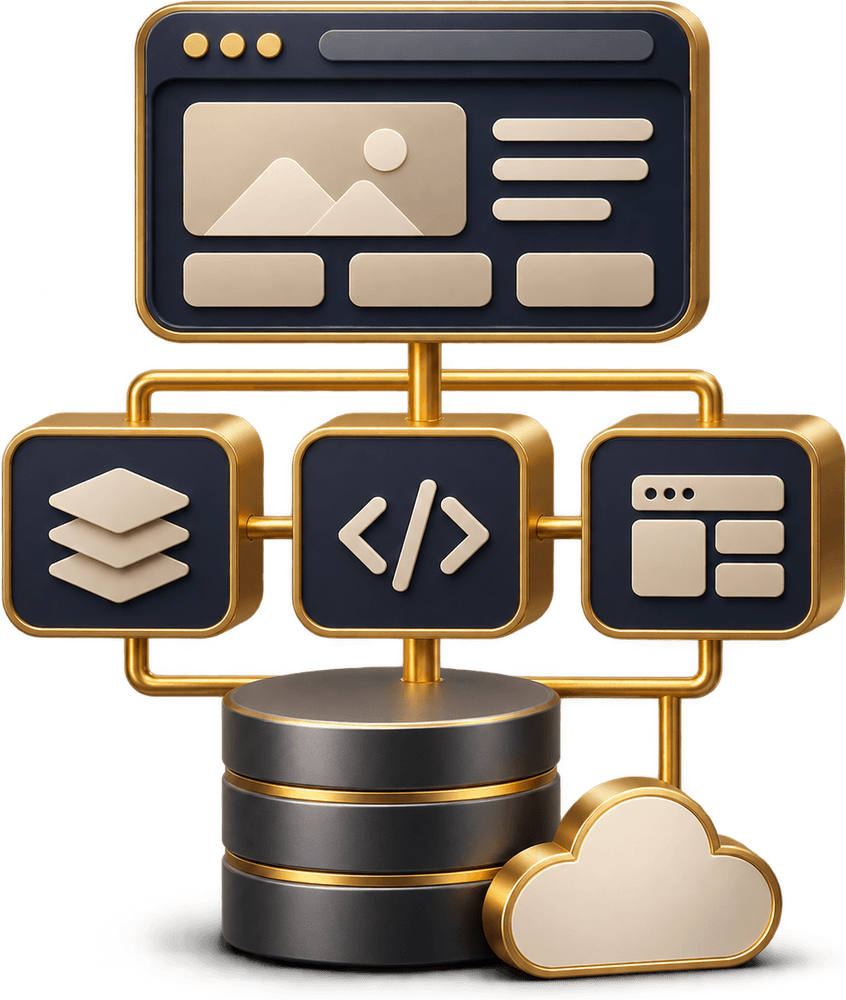
Technology chosen
for the requirements.
The platform is selected against the features, integration options, budget and people who will maintain it.
- Mobile-first web applications and responsive interfaces
- Custom dashboards, portals and internal tools
- API integrations with existing systems
- AI-assisted features where they add real value
- Cloud-connected and database-driven solutions
From specification
to a tested release.
You can review progress at agreed points and assess what has been completed before the next stage begins.
- Discovery—we document needs, users, workflows and constraints.
- UX/UI design—we design clear screens and practical user journeys.
- Development—we build in controlled stages and keep you updated.
- Testing—we check features, forms, performance and essential security measures.
- Deployment—we plan the release and carry out final checks.
- Support and upgrades—we agree on maintenance and future improvements.


Custom development,
with clear boundaries.
We look at the users, data and systems surrounding the task. That provides a practical specification for what needs to be built and what can remain unchanged.

Mobile Apps

Web Applications

eCommerce

Dashboards & SaaS

Make your systems
work together.
We examine the available APIs and the way your team uses the data before proposing an integration.
- CRMs, ERPs and payment gateways
- E-commerce, social and community tools
- IoT, forms and external data sources where needed
- Chatbots and AI assistants with clear boundaries
- Custom backend systems and APIs
We establish the source of each record, the update direction and error handling before connecting services.
A PRACTICAL STARTING POINT
Integrate the exception path as well as the happy path.
APIs need rules for permissions, field mapping, retries and duplicate records. Start with a bounded exchange of information that can be verified.
01 · Prepare
List the systems involved, the records they exchange and which system owns each field.
02 · Verify
Check a successful transfer, a rejected input and a repeated submission. Confirm that failures can be found and reviewed.
03 · Keep ownership clear
Keep access ownership, change records and an agreed contact for failures between the systems.
Illustrative sequence. The actual configuration and responsibilities follow the agreed requirements.
DELIVERY & OWNERSHIP
Confirm the dependency before building around it.
Identify the provider, available access and the functions the external service actually supports. Include licence or usage restrictions that could affect the proposed work.
01 · Prepare
Validate API access, field mappings and provider restrictions before implementation.
02 · Verify
Verify field mapping, authentication, rejected inputs and repeated requests against the actual provider API.
03 · Keep ownership clear
Document credential ownership, retry limits and the route for external-integration failures.
OUR WORK
Development that connects the working parts.
Examples of websites, tools and connected systems.

Great Eastern Hakka
An online identity for a restaurant
We brought the restaurant’s character into a mobile-friendly website, combining visual material with the practical information visitors need.

Hotmetals
Sports content and multimedia
We organised sports news, updates and rider information into a visually led website for a motorsport audience.
IN OUR CLIENTS’ WORDS
“Exceptional service from start to finish.”
David R. · Neo Design
SERVICE AREA
For your audience in London.
Connected business tools.
The city shown on the map identifies the audience, not where every record is stored. Discuss the information flow and any specific requirements separately from the geographic page label.
Enforce permissions on the server and handle credentials outside public code.
The map identifies the audience area. Project scope, collaboration and delivery are agreed around the business and its users; it does not imply a local office.
- User roles
- Record ownership
- Validation and exception handling
London
What should your next tool do?
Describe the process, who uses it and where the current setup fails. We will discuss requirements and feasible next steps.

A modern stack for web applications and workflows.

HTML5

CSS3

JavaScript

Angular

ReactJS

Node.js

CloudLinux
PRACTICAL QUESTIONS
Before we agree the next step.
Questions about the work, the checks and the handover.
Often the useful change is a bounded feature or integration. Review existing capabilities and maintenance constraints before committing to a wider replacement.
Agree whether the enquiry also needs durable storage, how delivery failures are detected and who follows up. A successful screen message should correspond to the behaviour the system actually guarantees.
That requires appropriate checks in the booking system, rather than the page design alone. Define the reservation and confirmation rules and test concurrent requests within the agreed technical scope.
YOUR NEXT STEP
Keep multilingual behaviour consistent through the stack.
Share the existing providers and the connection you need. We can check the dependency before promising an implementation.
Validate API access, field mappings and provider restrictions before implementation.