
Recommended Services
Supported Scripts
Web Development · Amsterdam
Development for request handling.
Control the data exports.
For organisations serving Amsterdam, development should support the real task: handling requests, presenting information or connecting existing systems. That is where we begin.


Designed for your project
Development connects validation, storage and delivery so an enquiry is recorded and routed correctly. Define what should happen after submission, including failures. Enforce permissions on the server and handle credentials outside public code.

Fast and scalable
The initial design includes room for agreed future requirements without pretending every possible feature belongs in version one.

Security from the start
User access, authentication and permissions are defined alongside the functionality.

The tools follow
the task.
We consider existing infrastructure and long-term support alongside the immediate development requirements.
- Mobile-first web applications and responsive interfaces
- Custom dashboards, portals and internal tools
- API integrations with existing systems
- AI-assisted features where they add real value
- Cloud-connected and database-driven solutions
Development in stages
you can review.
Discovery, interface planning, development, testing and release each have a defined purpose and deliverable.
- Discovery—we document needs, users, workflows and constraints.
- UX/UI design—we design clear screens and practical user journeys.
- Development—we build in controlled stages and keep you updated.
- Testing—we check features, forms, performance and essential security measures.
- Deployment—we plan the release and carry out final checks.
- Support and upgrades—we agree on maintenance and future improvements.


Solve the right problem.
Build only what is needed.
We look at the users, data and systems surrounding the task. That provides a practical specification for what needs to be built and what can remain unchanged.

Mobile Apps

Web Applications

eCommerce

Dashboards & SaaS

Make your systems
work together.
Payments, CRM records, orders and reports need agreed rules for how information moves between systems.
- CRMs, ERPs and payment gateways
- E-commerce, social and community tools
- IoT, forms and external data sources where needed
- Chatbots and AI assistants with clear boundaries
- Custom backend systems and APIs
Connections depend on access permissions, available API functions and the terms of the external platform. We check these constraints at the start.
A PRACTICAL STARTING POINT
Replace a manual workaround with a maintainable workflow.
Map the existing steps and their exceptions before building a replacement. The first release should solve a defined task and leave a clear operating handover.
01 · Prepare
Identify what already works, where people get stuck and which URLs or records must survive the change.
02 · Verify
Compare the old and new journey using the same tasks. Check retained information and the transition path.
03 · Keep ownership clear
Keep a record of changed behaviour, the people affected and the process for subsequent corrections.
Illustrative sequence. The actual configuration and responsibilities follow the agreed requirements.
DELIVERY & OWNERSHIP
Check readiness before demand increases.
Describe the expected busy period and the activity behind it. Separate a known event or planned launch from an unsupported assumption about future growth.
01 · Prepare
Test the critical endpoints and failure handling for the expected activity.
02 · Verify
Exercise the relevant endpoints and background work with representative activity and defined failure handling.
03 · Keep ownership clear
Assign capacity review, operational logs and the decision to change the implementation or environment.
OUR WORK
Development that connects the working parts.
Examples of websites, tools and connected systems.

Rigas Pack
A business catalogue for packaging solutions
We organised packaging products and services into a responsive corporate website, with categories that explain their applications across different industries.
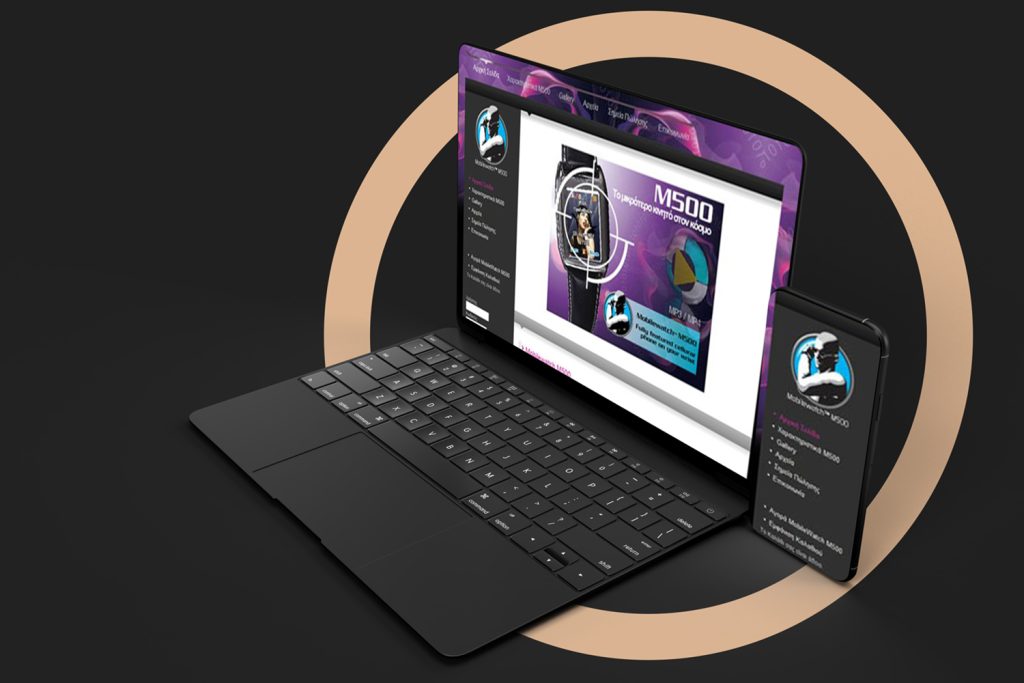
M500 Smartwatch
A product presentation built around its design
We developed a website introducing the M500 smartwatch, using graphics and motion to present its design and capabilities to a technology-focused audience.
IN OUR CLIENTS’ WORDS
“They always deliver and are very creative with web design/development. They are absolute masters of WordPress. They have also been great with dealing with a large number of stakeholders within business.”
Joel K. · Jim’s Group
SERVICE AREA
For your audience in Amsterdam.
Replacing an existing journey.
A service aimed at Amsterdam still needs an operating plan after launch. The useful local context is the audience and its journey; maintenance follows the actual systems and people involved.
Keep deployment, dependency updates and integration ownership documented.
The map identifies the audience area. Project scope, collaboration and delivery are agreed around the business and its users; it does not imply a local office.
- Source of truth
- Update direction
- Retries and duplicate prevention
Amsterdam
Let’s scope the missing functionality.
Share the existing systems and the outcome you need. We will help define a build that can be reviewed and maintained.

A modern stack for web applications and workflows.

HTML5

CSS3

JavaScript

Angular

ReactJS

Node.js

CloudLinux
PRACTICAL QUESTIONS
Before we agree the next step.
Questions about the work, the checks and the handover.
Choose the authoritative source for each field and describe how changes propagate. Price, stock and descriptive content do not necessarily have to share the same owner.
No. The server must enforce permissions for the underlying action and record. Interface visibility helps usability but cannot substitute for authorisation.
Where it affects replies or processing, it can be useful to record it explicitly. Define how the receiving system uses that value and what happens if it is missing.
YOUR NEXT STEP
Build a portal around roles and useful tasks.
Explain who will use and maintain the result. We can make the responsibilities part of the scope from the beginning.
Identify application roles and the people authorised to approve deployments.