
Recommended Services
Supported Scripts
Web Development · Rotterdam
Development for multilingual forms.
Plan the failure handling.
For organisations serving Rotterdam, development should support the real task: handling requests, presenting information or connecting existing systems. That is where we begin.


Designed for your project
Forms, stored records, notifications and external systems may all need language handling. Describe those requirements beyond translating visible page text. Test the critical endpoints and failure handling for the expected activity.

Fast and scalable
We account for foreseeable changes in users, data and features when defining the architecture.

Security from the start
We document who can view, create and change information before connecting the interface to live data.
A maintainable build starts
with a clear technical brief.
The platform is selected against the features, integration options, budget and people who will maintain it.
- Mobile-first web applications and responsive interfaces
- Custom dashboards, portals and internal tools
- API integrations with existing systems
- AI-assisted features where they add real value
- Cloud-connected and database-driven solutions
From specification
to a tested release.
Discovery, interface planning, development, testing and release each have a defined purpose and deliverable.
- Discovery—we document needs, users, workflows and constraints.
- UX/UI design—we design clear screens and practical user journeys.
- Development—we build in controlled stages and keep you updated.
- Testing—we check features, forms, performance and essential security measures.
- Deployment—we plan the release and carry out final checks.
- Support and upgrades—we agree on maintenance and future improvements.


Solve the right problem.
Build only what is needed.
A customer portal, reporting tool or booking workflow needs a clear role. We define that role before adding screens and features.

Mobile Apps

Web Applications

eCommerce

Dashboards & SaaS

Integrations with a purpose.
Payments, CRM records, orders and reports need agreed rules for how information moves between systems.
- CRMs, ERPs and payment gateways
- E-commerce, social and community tools
- IoT, forms and external data sources where needed
- Chatbots and AI assistants with clear boundaries
- Custom backend systems and APIs
We establish the source of each record, the update direction and error handling before connecting services.
A PRACTICAL STARTING POINT
Connect the catalogue to the way orders are handled.
Product data, pricing rules and order handovers must agree across the website and connected systems. Define ownership and update rules before building the integration.
01 · Prepare
Prepare representative products, categories, images and the information customers need before making a decision.
02 · Verify
Review a product on mobile and desktop, including variations, specifications and the next step to enquire or purchase.
03 · Keep ownership clear
Keep an owner for product information, stock-related connections and future catalogue changes.
Illustrative sequence. The actual configuration and responsibilities follow the agreed requirements.
DELIVERY & OWNERSHIP
Make future changes part of the original discussion.
Identify the settings, content or software that are likely to change. Include the people, licences and documentation needed to keep those changes manageable.
01 · Prepare
Keep deployment, dependency updates and integration ownership documented.
02 · Verify
Run a representative deployment and regression check for the feature and its dependencies.
03 · Keep ownership clear
Provide source and configuration handover, including dependency updates and the agreed maintenance boundary.
OUR WORK
Development that connects the working parts.
Examples of websites, tools and connected systems.
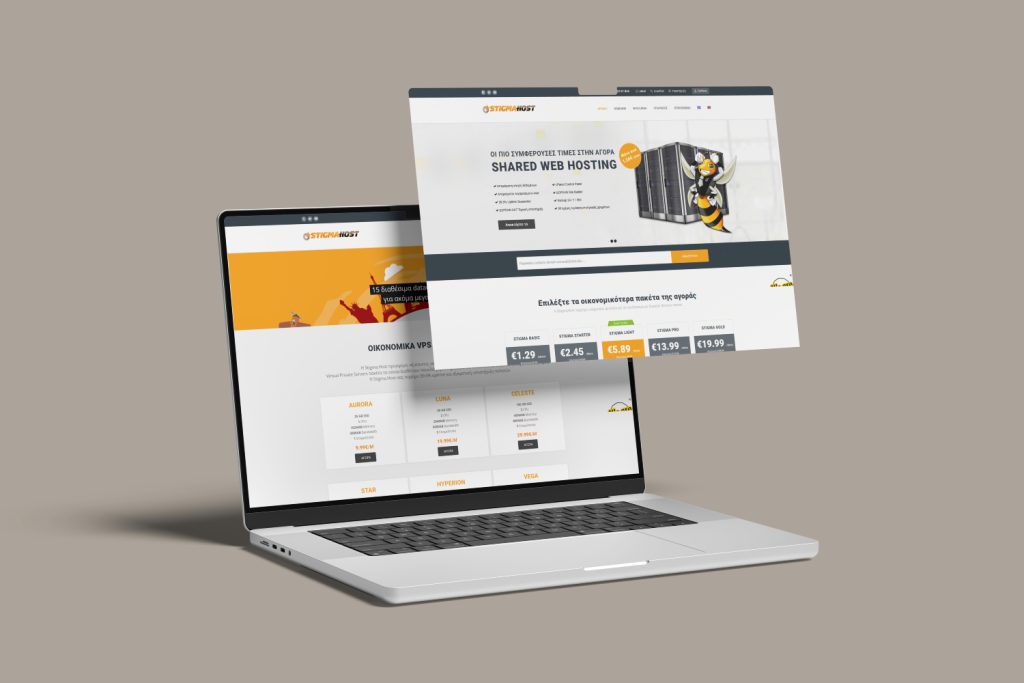
StigmaHost
WordPress and WHMCS in one customer journey
We connected WordPress service information with WHMCS client management, bringing registration, payments and support into a coherent customer journey.
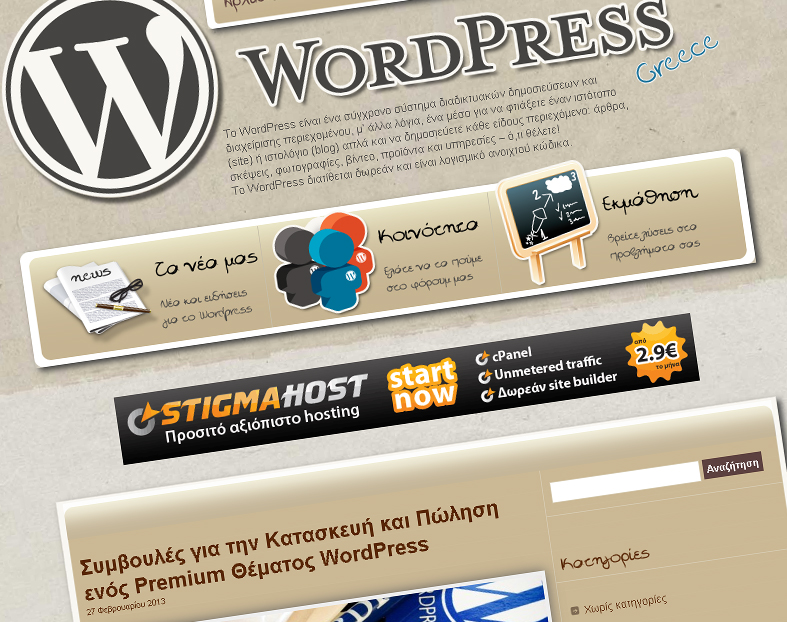
WordPress Greece
Content for the WordPress community
We created a WordPress website with news, learning material and collaboration tools for developers, businesses and people working with WordPress.
IN OUR CLIENTS’ WORDS
“We could not ask for a more dependable partner to help us navigate the ever changing on-line landscape within our field and offer our customers the most user friendly experience possible.”
Ben S. · Classic Arabian Company
SERVICE AREA
For your audience in Rotterdam.
Bookings.
The audience area does not describe the entire system. For work serving Rotterdam, also identify existing providers, external tools and other users affected by a change.
Preserve existing records and working integrations during a platform change.
The map identifies the audience area. Project scope, collaboration and delivery are agreed around the business and its users; it does not imply a local office.
- Current steps and approvals
- Rules that must remain
- A complete first workflow
Rotterdam
Let’s scope the missing functionality.
Describe the process, who uses it and where the current setup fails. We will discuss requirements and feasible next steps.

A modern stack for web applications and workflows.

HTML5

CSS3

JavaScript

Angular

ReactJS

Node.js

CloudLinux
PRACTICAL QUESTIONS
Before we agree the next step.
Questions about the work, the checks and the handover.
The integration needs an agreed failure response: a visible error, queued retry or manual review, depending on the operation. Define limits and duplicate handling before adding automatic retries.
Often the useful change is a bounded feature or integration. Review existing capabilities and maintenance constraints before committing to a wider replacement.
Agree whether the enquiry also needs durable storage, how delivery failures are detected and who follows up. A successful screen message should correspond to the behaviour the system actually guarantees.
YOUR NEXT STEP
Keep multilingual behaviour consistent through the stack.
Share the existing providers and the connection you need. We can check the dependency before promising an implementation.
Validate API access, field mappings and provider restrictions before implementation.